research
I am currently a postdoctoral researcher at FNSPE CTU in Prague (Global Postdoctoral Fellowship Program). I earned my PhD in Particle Physics at Lund University (June 2023) in Sweden, and I also spent my first postdoctoral period there.
My scientific objective is to experimentally study Quantum Chromodynamics (QCD) in the non-perturbative regime – or in other words – describe how the insides of hadronic particles such as protons behave (which we don't know at all, yet they make up everything around us!). One arena to study these partons and their interactions is the Quark-Gluon Plasma (QGP) – a state of matter that could be explained as melted and dissolved protons and neutrons into a liquid of its elementary constituents. The QGP formed the Universe microseconds after its creation, comprises the core of neutron stars, and can be recreated nowadays with particle colliders.
Experimentally, I remain active in the ALICE collaboration at CERN, and I currently work mostly within the STAR experiment. My research continues to focus on "small systems" and novel observables, and more recently also on long-range correlations and unfolding methods based on deep learning techniques. I aim to pin down the origin of QGP-like behaviours in particle collisions – such as the enhanced production of strange quarks or collective flow – and understand their emergence.
Please find below some of my publications. For a complete list, please refer to my InspireHEP profile.
2023
-
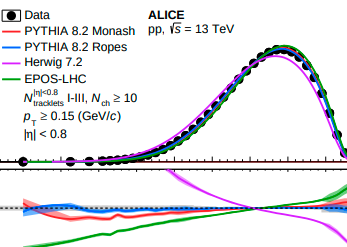 JHEPLight-flavor particle production in high-multiplicity pp collisions at \sqrts = 13 TeV as a function of transverse spherocityALICE CollaborationOct 2023
Results on the transverse spherocity dependence of light-flavor particle production (π, K, p, ϕ, K∗0, K0S, Λ, Ξ) at midrapidity in high-multiplicity pp collisions at s√=13 TeV were obtained with the ALICE apparatus. The transverse spherocity estimator (SpT=1O) categorizes events by their azimuthal topology. Utilizing narrow selections on SpT=1O, it is possible to contrast particle production in collisions dominated by many soft initial interactions with that observed in collisions dominated by one or more hard scatterings. Results are reported for two multiplicity estimators covering different pseudorapidity regions. The SpT=1O estimator is found to effectively constrain the hardness of the events when the midrapidity (∣∣η∣∣<0.8) estimator is used. The production rates of strange particles are found to be slightly higher for soft isotropic topologies, and severely suppressed in hard jet-like topologies. These effects are more pronounced for hadrons with larger mass and strangeness content, and observed when the topological selection is done within a narrow multiplicity interval. This demonstrates that an important aspect of the universal scaling of strangeness enhancement with final-state multiplicity is that high-multiplicity collisions are dominated by soft, isotropic processes. On the contrary, strangeness production in events with jet-like processes is significantly reduced. The results presented in this article are compared with several QCD-inspired Monte Carlo event generators. Models that incorporate a two-component phenomenology, either through mechanisms accounting for string density, or thermal production, are able to describe the observed strangeness enhancement as a function of SpT=1O.
@article{ALICE:2023bga, author = {Collaboration, ALICE}, doi = {https://doi.org/10.48550/arXiv.2310.10236}, collaboration = {ALICE}, title = {{Light-flavor particle production in high-multiplicity pp collisions at \sqrt{s} = 13 TeV as a function of transverse spherocity}}, eprint = {2310.10236}, archiveprefix = {arXiv}, primaryclass = {hep-ex}, reportnumber = {CERN-EP-2023-215}, month = oct, year = {2023}, } -
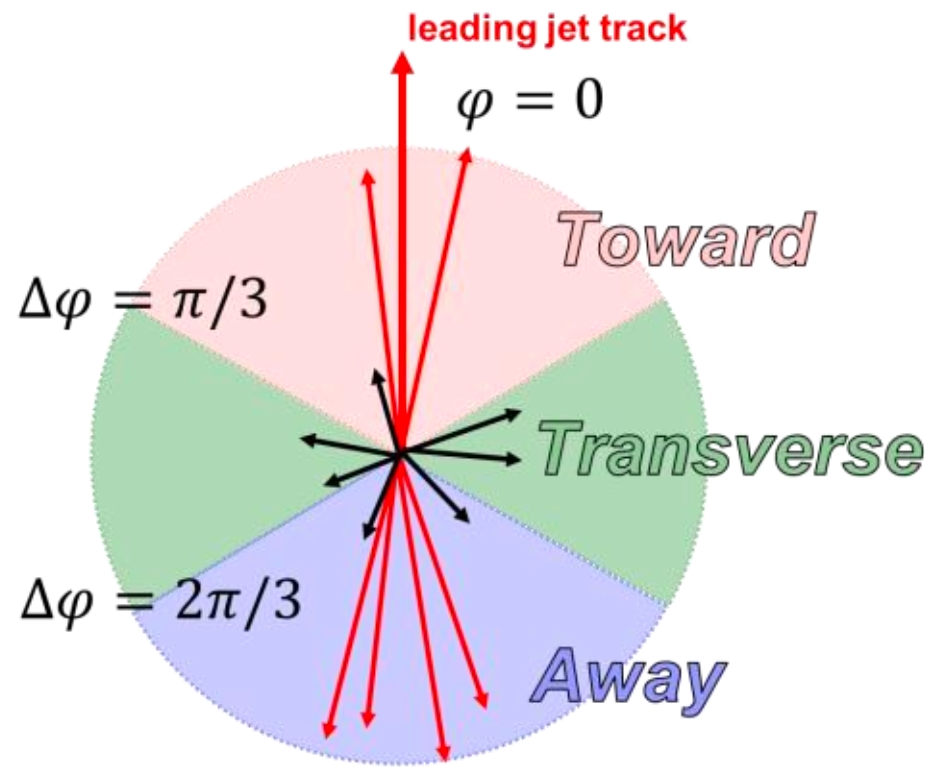
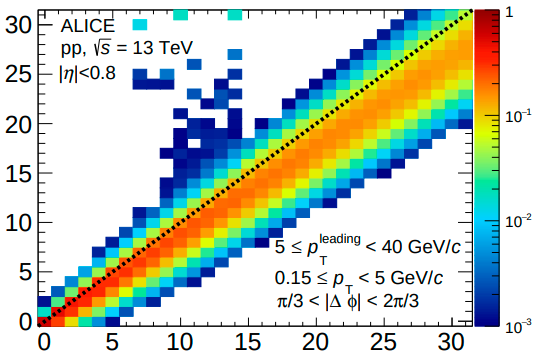 JHEPProduction of pions, kaons, and protons as a function of the relative transverse activity classifier in pp collisions at \sqrts = 13 TeVALICE CollaborationJHEP, Oct 2023
The production of π±, K±, and (p⎯⎯⎯)p is measured in pp collisions at s√=13 TeV in different topological regions. Particle transverse momentum (pT) spectra are measured in the “toward”, “transverse”, and “away” angular regions defined with respect to the direction of the leading particle in the event. While the toward and away regions contain the fragmentation products of the near-side and away-side jets, respectively, the transverse region is dominated by particles from the Underlying Event (UE). The relative transverse activity classifier, RT=NT/⟨NT⟩, is used to group events according to their UE activity, where NT is the measured charged-particle multiplicity per event in the transverse region and ⟨NT⟩ is the mean value over all the analysed events. The first measurements of identified particle pT spectra as a function of RT in the three topological regions are reported. The yield of high transverse momentum particles relative to the RT-integrated measurement decreases with increasing RT in both the toward and away regions, indicating that the softer UE dominates particle production as RT increases and validating that RT can be used to control the magnitude of the UE. Conversely, the spectral shapes in the transverse region harden significantly with increasing RT. This hardening follows a mass ordering, being more significant for heavier particles. The pT-differential particle ratios (p+p⎯⎯⎯)/(π++π−) and (K++K−)/(π++π−) in the low UE limit (RT→0) approach expectations from Monte Carlo generators such as PYTHIA 8 with Monash 2013 tune and EPOS LHC, where the jet-fragmentation models have been tuned to reproduce e+e− results.
@article{ALICE:2023yuk, author = {Collaboration, ALICE}, collaboration = {ALICE}, title = {{Production of pions, kaons, and protons as a function of the relative transverse activity classifier in pp collisions at \sqrt{s} = 13 TeV}}, eprint = {2301.10120}, archiveprefix = {arXiv}, primaryclass = {nucl-ex}, reportnumber = {CERN-EP-2022-286}, doi = {10.1007/JHEP06(2023)027}, journal = {JHEP}, volume = {06}, pages = {027}, year = {2023}, } -
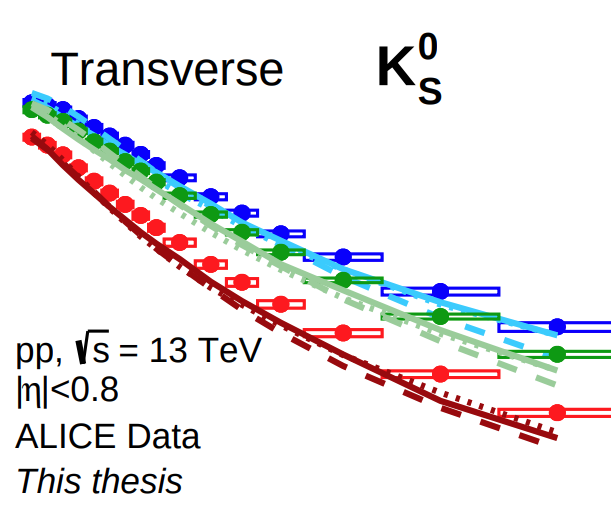 PhD thesisProduction of strangeness in partonic interactions at the LHCOliver MatonohaMay 2023
The strong interaction is responsible for nearly all observable baryonic matter in the Universe. Quantum Chromodynamics, which describes interactions between quarks and gluons, however, cannot be solved analytically in the non-perturbative regime, involving low momentum transfers. In this regime, interesting phenomena occur, such as the formation of colour-neutral hadrons from constituent quarks and in extreme conditions, the transition of hadronic matter to a plasma of deconfined quarks and gluons. This quark-gluon plasma (QGP) is believed to have comprised the Universe in the first several microseconds after the Big Bang and can be recreated in laboratory conditions, such as in collisions of ultra-relativistic heavy nuclei at the Large Hadron Collider (LHC). The QGP exhibits certain signatures whose strength varies with the multiplicity of particles produced in the collisions, which is directly linked to the number of colliding nucleons in the collision and the energy density in the initial state. In the last decade, contrary to expectations, it has been discovered that pp collisions and pA collisions also exhibit QGP-like behaviour, including an increase in the production of strange particles and an increase in the ratio of neutral strange hadrons, Lambda to K0s, at intermediate transverse momentum p_T. However, in pp collisions, it is challenging to link particle multiplicity to the initial state. This dissertation aims to investigate the origin of QGP-like behaviour in pp collisions by analysing the production of K0s and Lambda particles and their dependence on event shape and sub-structure. Specifically, measurements are performed using the ALICE detector at the LHC for pp collisions at \sqrts=13 TeV. For the first time ever, observables quantifying the event shape geometry, the transverse spherocity S_O, and the magnitude of the underlying event activity, the R_T, R_T,min, and R_T,max, are employed to investigate their effect on the production of K0s and Lambda particles. These observables allow for a more differentiated understanding of the collision dynamics and help access the number of colliding quarks and gluons (partons). The results of this study will contribute to the understanding of the QGP-like behaviour in pp collisions and help further the understanding of the strong interaction at low momentum transfers.
@thesis{Matonoha:2023okq,
  author = {Matonoha, Oliver},
  title = {{Production of strangeness in partonic interactions at the LHC}},
  reportnumber = {CERN-THESIS-2023-149},
  type = {PhD thesis},
  school = {2023-05-22, Lund University, Lund U.},
  month = may,
  year = {2023},
  url = {http://cds.cern.ch/record/2871283},
}


2021
-
 ProceedingsLight-flavour hadron production as a function of the underlying eventOliver MatonohaMay 2021Contribution to the 2021 QCD session of the 55th Rencontres de Moriond
Measurements of light-flavor hadron production in high-energy hadronic collisions by ALICE have shown that different collision systems have similar features when compared at the same multiplicity. Furthermore, the multiplicity dependence of strangeness enhancement is indica- tive of significant final-state interactions even in pp collisions. In this proceedings, the goal is to investigate both observations further using underlying event (UE) measurements. Studies of the charged particle multiplicity of the UE event are presented for both pp and p–Pb col- lisions and compared. Study of the modification of the jet-like component I pp,p−Pb,Pb−Pb is also reported as a function of mid-rapidity transverse activity hN ch i TS . Finally, strangeness enhancement in pp collisions is investigated by measuring the relative production of φ and Ξ compared to pions as a function of the relative UE activity R T . For all measurements, the results are compared with model calculations with and without QGP effects included (EPOS LHC and PYTHIA, respectively).
@proceedings{MatonohaMoriond, author = {Matonoha, Oliver}, collaboration = {ALICE}, title = {{Light-flavour hadron production as a function of the underlying event}}, year = {2021}, url = {https://cds.cern.ch/record/2758268}, note = {Contribution to the 2021 QCD session of the 55th Rencontres de Moriond}, } -
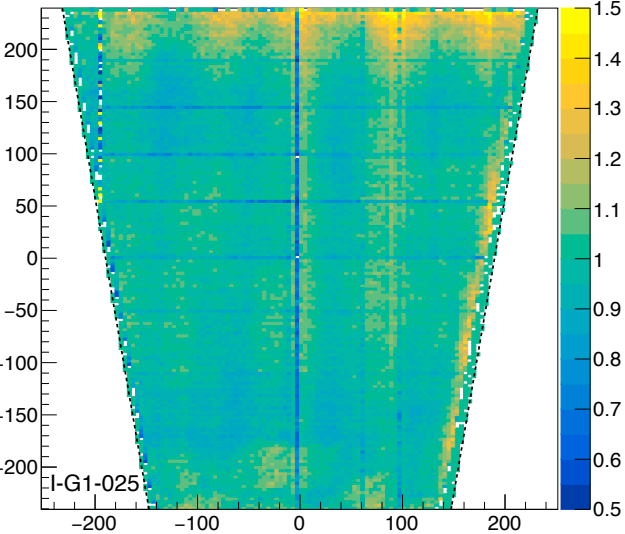 JINSTThe upgrade of the ALICE TPC with GEMs and continuous readoutJ. Adolfsson, and othersJINST, May 2021
The upgrade of the ALICE TPC will allow the experiment to cope with the high interaction rates foreseen for the forthcoming Run 3 and Run 4 at the CERN LHC. In this article, we describe the design of new readout chambers and front-end electronics, which are driven by the goals of the experiment. Gas Electron Multiplier (GEM) detectors arranged in stacks containing four GEMs each, and continuous readout electronics based on the SAMPA chip, an ALICE development, are replacing the previous elements. The construction of these new elements, together with their associated quality control procedures, is explained in detail. Finally, the readout chamber and front-end electronics cards replacement, together with the commissioning of the detector prior to installation in the experimental cavern, are presented. After a nine-year period of R&D, construction, and assembly, the upgrade of the TPC was completed in 2020.
@article{ALICETPC:2020ann,
  author = {Adolfsson, J. and others},
  collaboration = {ALICE TPC},
  title = {{The upgrade of the ALICE TPC with GEMs and continuous readout}},
  eprint = {2012.09518},
  archiveprefix = {arXiv},
  primaryclass = {physics.ins-det},
  doi = {10.1088/1748-0221/16/03/P03022},
  journal = {JINST},
  volume = {16},
  number = {03},
  pages = {P03022},
  year = {2021},
}


2020
-
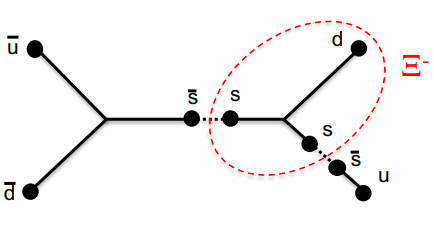 Eur.Phys.J.AQCD challenges from pp to A-A collisionsJ. Adolfsson, and othersEur. Phys. J. A, May 2020
This paper is a write-up of the ideas that were presented, developed and discussed at the third International Workshop on QCD Challenges from pp to A-A, which took place in August 2019 in Lund, Sweden. The goal of the workshop was to focus on some of the open questions in the field and try to come up with concrete suggestions for how to make progress on both the experimental and theoretical sides. The paper gives a brief introduction to each topic and then summarizes the primary results.
@article{Adolfsson:2020dhm,
  author = {Adolfsson, J. and others},
  title = {{QCD challenges from pp to A-A collisions}},
  eprint = {2003.10997},
  archiveprefix = {arXiv},
  primaryclass = {hep-ph},
  doi = {10.1140/epja/s10050-020-00270-1},
  journal = {Eur. Phys. J. A},
  volume = {56},
  number = {11},
  pages = {288},
  year = {2020},
}

2017
-
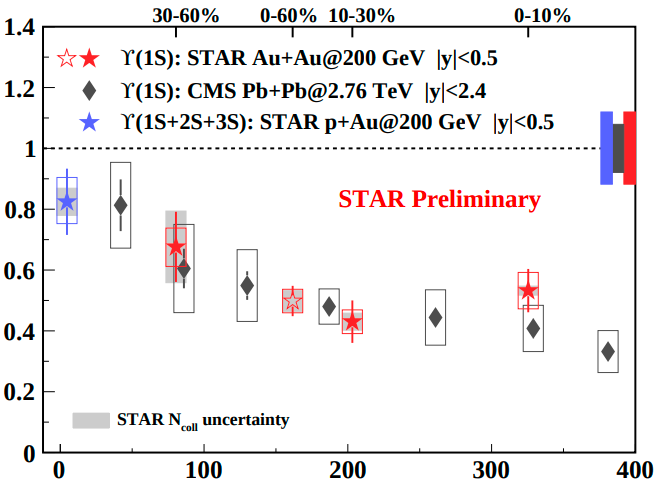 PoSMeasurements of the Υmeson production in Au+Au collisions at the STAR experimentOliver MatonohaPoS, May 2017
In ultra-relativistic heavy-ion collisions, creation of a novel state of matter, consisting of deconfined quarks and gluons, has been observed. Quarkonium suppression in the medium due to the colour screening effect has been viewed as a direct evidence of the formation of such matter. Moreover, different quarkonium states are expected to dissociate at different temperatures, which can be used to constrain the medium temperature. At RHIC energies, other effects, such as regeneration and co-mover absorption, are expected to be very small for the bottomonium family, which makes it a cleaner probe compared to the J/ψ meson. The nuclear modification factors for the Υ states measured in Au+Au collisions at sNN√=200 GeV via both the di-muon and di-electron channels by the STAR experiment at RHIC are reported and compared with similar measurements at the LHC as well as theoretical calculations. Moreover, measurements of the Υ production in p+p and p+Au collisions are presented as well, providing a p+p reference with significantly improved precision and a quantification of the cold nuclear matter effects, respectively.
@article{Matonoha:2017hew,
  author = {Matonoha, Oliver},
  editor = {Checchia, Paolo and others},
  collaboration = {STAR},
  title = {{Measurements of the \Upsilon meson production in Au+Au collisions at the STAR experiment}},
  doi = {10.22323/1.314.0174},
  journal = {PoS},
  volume = {EPS-HEP2017},
  pages = {174},
  year = {2017},
}
